
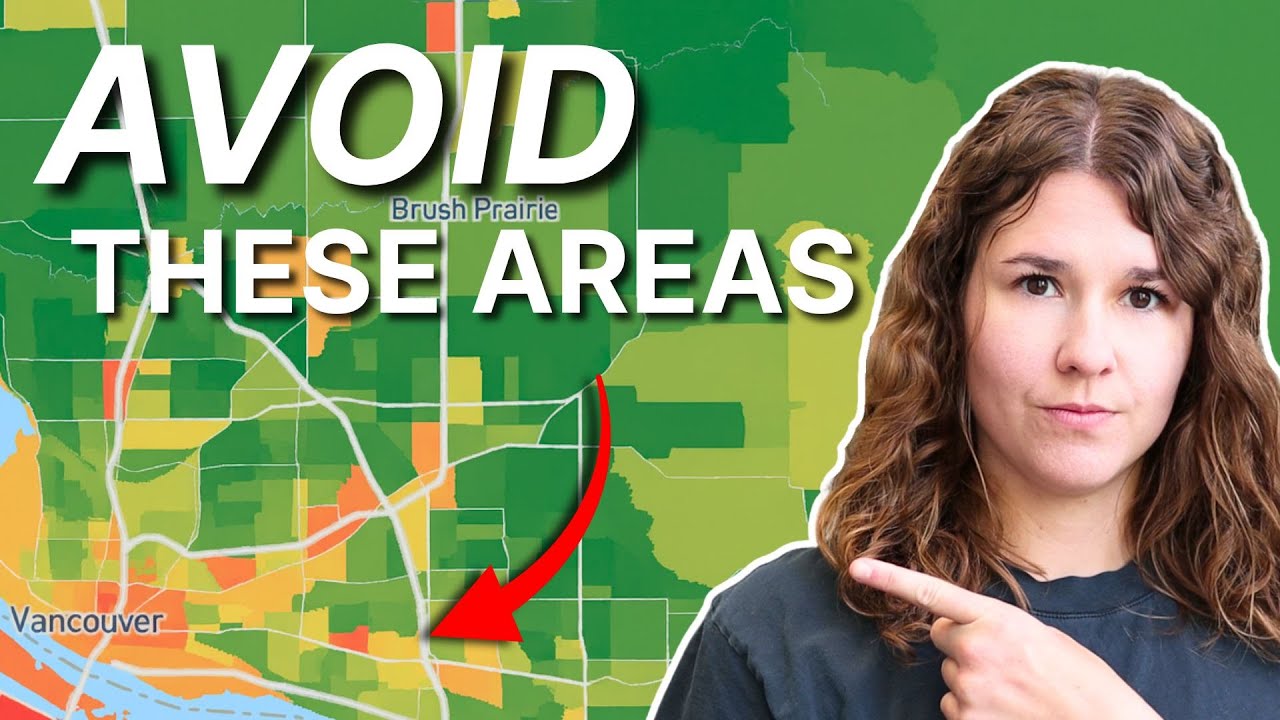
Buying in Vancouver or Camas is a big move, and the wrong neighborhood can cost you real money and peace of mind later.
We will hit the main things that hurt resale, then walk through 5 areas that buyers often ask about: Orchards, Image, Rose Village and Fourth Plain Village, Minnehaha, and Battle Ground.
Key things to check before you pick a Vancouver, WA neighborhood
Before looking at specific areas, it helps to know what usually separates strong neighborhoods from weaker ones in Vancouver and Camas.
Here is a tight checklist to keep in mind:
- Resale value
- Check recent sales and price trends over 3 to 5 years.
- Compared to stronger areas like Camas, Felida, Salmon Creek, and Fisher’s Landing.
- Appreciation and inventory
- Many similar homes for sale at once can drag prices down.
- Lots of new construction nearby can pull buyers away from resale homes.
- Commute and traffic
- Drive your actual route to I-5, I-205, SR-500, and into Portland at rush hour.
- Note choke points, bus lines, and common accident spots.
- Schools
- Look up ratings and reviews on public sites like Niche.com or GreatSchools.
- Ask local parents how the schools feel day to day.
- Schedule a tour of the schools if you’re moving from out of the area.
- Neighborhood feel
- Mix of home ages and upkeep, yard care, and cars parked on lawns.
- Parks, sidewalks, and how safe it feels on an evening walk.
- City plans and new projects
- Check for planned apartments, warehouses, or road projects nearby.
- Ask your agent about zoning and growth paths.
Resale value, appreciation, and inventory
Key points for the Vancouver WA market since 2020:
- High inventory can hurt
- When many similar homes hit at once, buyers have options.
- Sellers start to cut prices and offer credits to compete.
- Your home can sit longer and sell for less than you expect.
- Flat or slow appreciation limits equity
- If prices barely move for years, your equity grows only from your loan paydown.
- That can make it harder to move up to a better home later.
- New construction as direct competition
- Builders offer rate buydowns and closing cost credits.
- Many buyers pick “brand new” over a 5 to 10-year-old resale home.
- That keeps pressure on resale prices in newer outer areas.
Commute time, traffic, and schools
Buyers care about time, stress, and their kids, and that shows up in resale.
- Commute reality
- Map apps can be optimistic, so drive them during rush hour.
- Pay attention to access to I-5, I-205, SR-500, and SR-14.
- An extra 10 minutes each way can push buyers to other areas later.
- School ratings
- Many families filter searches by school rating on big real estate sites.
- Lower-rated schools often mean a smaller buyer pool.
- A smaller buyer pool usually means slower sales and softer prices.
5 Vancouver, WA areas to think twice about before you buy
These areas can work for some buyers, but they carry real trade-offs on traffic, feel, and resale.
1. Orchards
Orchards sits in northeast Vancouver, heading up toward Brush Prairie.
Common buyer feedback and resale issues:
- Fast growth with scattered development, lots of subdivisions off main roads.
- Strong congestion on Fourth Plain, 117th, Ward Road, Padden Parkway, and 162nd Ave.
- Hodgepodge feel, mix of:
- Older small homes and manufactured homes.
- Infill homes on old lots.
- Basic tract homes with similar floor plans.
- No true “center” or downtown, more strip malls and big box stores.
- Many new construction homes are in the roughly 500,000 to 650,000 range.
- Builders compete with resale sellers using incentives.
- Buyers often pick a new house over a 5-year-old house.
- Post 2020 appreciation has been flatter than spots like Fisher’s Landing, Camas, Felida, Salmon Creek, and Ridgefield.
Who may fit:
- Buyers who care most about price per square foot.
- People who are fine with traffic and who do not need a strong neighborhood feel.
2. Image
Image sits in East Vancouver, just south of the Orchards.
Things to know before you buy there:
- Many 1970s to 1990s single-level ranch homes.
- A lot of homes feel tired, with dated roofs, windows, and interiors.
- Many no HOA pockets, which can mean:
- Overgrown yards.
- Stored RVs and boats.
- A big gap from the best-kept home to the worst.
- Crowd of very similar 3-bed, 2-bath ranches.
- Heavy competition on price.
- Tough to stand out when you go to sell.
- School ratings in public sources like Niche.com often trail East Vancouver and Camas.
- If you live deep inside the neighborhood, it can take 10 to 12 minutes just to reach I-205 or SR-500.
3. Rose Village and Fourth Plain Village
Rose Village and Fourth Plain Village sit between I-5 and SR-500, near central Vancouver.
Key points for buyers:
- Very central, but packed between freeways and busy arterials.
- Burnt Bridge Creek Trail runs through the area.
- Ongoing homeless camping and safety concerns over the years.
- People using the trail often deal with addiction and mental health struggles.
- Incidents and complaints have been reported, so you should check current conditions yourself.
- Housing stock is older:
- Many small bungalows and cottages.
- A lot of 2 to 3-bedroom, 1-bath homes.
- Many need plumbing, electrical, and foundation updates.
- These smaller, older homes often:
- Need high remodel costs to feel modern.
- Do not resell as easily as 1980s and newer homes in stronger school zones.
For some buyers, the central location and lower entry price make sense. For many others, trail safety and house age push them to nearby areas with newer homes.
4. Minnehaha
Minnehaha sits in the triangle of I-5, I-205, and SR-500.
What most buyers notice:
- Very central; you can reach much of Vancouver in about 10 to 12 minutes.
- Mixed feelings, with:
- Older homes on large lots.
- Duplexes and small rentals.
- Infill projects and new single-family homes.
- Not much clear community identity or downtown core.
- Lower prices than Fisher’s Landing, Camas, and Salmon Creek.
- That can help first-time buyers get in.
- It also often means lower resale values when you go to sell.
- Slower appreciation than nearby higher-demand neighborhoods.
Minnehaha can work if you want central access and a lower payment. You just need to accept a trade-off in long-term equity growth.
5. Battle Ground
We are talking about city lots in Battle Ground today, not acreage homes.
Battle Ground has changed a lot:
- The population has grown from roughly 6,000 in the late 1990s to close to 23,000 today.
- Roads and services have struggled to keep pace.
- The commute into Vancouver often runs 20 to 45 minutes at rush hour.
- Main route is 117th / Highway 503.
- Two to four lane highway with many stoplights and heavy backups.
- Former farmland around town has turned into:
- Big new subdivisions.
- Strip-style commercial centers.
- A more suburban feel than a small farm town.
- Large national builders now control much of the supply:
- DR Horton, Taylor Morrison, LGI, Richmond American, and others.
- They offer rate buydowns and strong incentives that compete with resale homes.
- Many new homes feel “cookie-cutter” with:
- Similar elevations and colors.
- Basic finishes compared with strong local builders.
Who is Battle Ground good for?
- First-time buyers who want the most square footage for the money.
- People who work remotely and do not care about the Vancouver commute.
- Buyers who accept a more generic feel for a lower price point.
How to choose a better fit neighborhood in Vancouver and Camas
Use the areas above as a starting point, then focus on pockets with stronger demand and livability.
Prioritize areas with strong demand and livability
Good comparison points in Clark County include Fisher’s Landing, Camas, Felida, Salmon Creek, and Ridgefield.
Here is what to look for:
- Walkable access to coffee, groceries, and daily needs.
- Parks and trails that feel safe, clean, and well used.
- School ratings that rank higher in public data.
- Balanced inventory, not miles of new construction with constant builder sales.
- Steady price growth since 2020, not wild spikes followed by long flat periods.
- Streets that feel quiet at night, with cared-for yards and low noise.
Practical steps:
- Drive your top neighborhoods at rush hour and late evening.
- Park, walk, and listen for freeway hum or commercial noise.
- Talk with neighbors at parks and on sidewalks.
- Ask your agent for a quick price and days-on-market report for each area.
Work with a local Clark County real estate expert
Online research helps, but local experience fills in the gaps.
A strong Vancouver or Camas agent can:
- Flag micro pockets with:
- Known traffic headaches.
- Weak resale history.
- Builder issues or past construction concerns.
- Explain the builder differences, from big nationals to small local firms.
- Pull data on:
- Appreciation over the last 3 to 5 years.
- Average days on market.
- How many new construction homes compete with resale in that price range?
Before you write an offer, ask for:
- A list of similar homes that sold and how long they sat.
- Current active listings that would compete with your future resale.
- An honest take on long-term upside compared with nearby alternatives.
Conclusion
Not every Vancouver, WA area offers the same long-term value. Traffic, age of homes, school strength, and heavy builder competition all shape how your equity grows and how easy it is to resell later.