
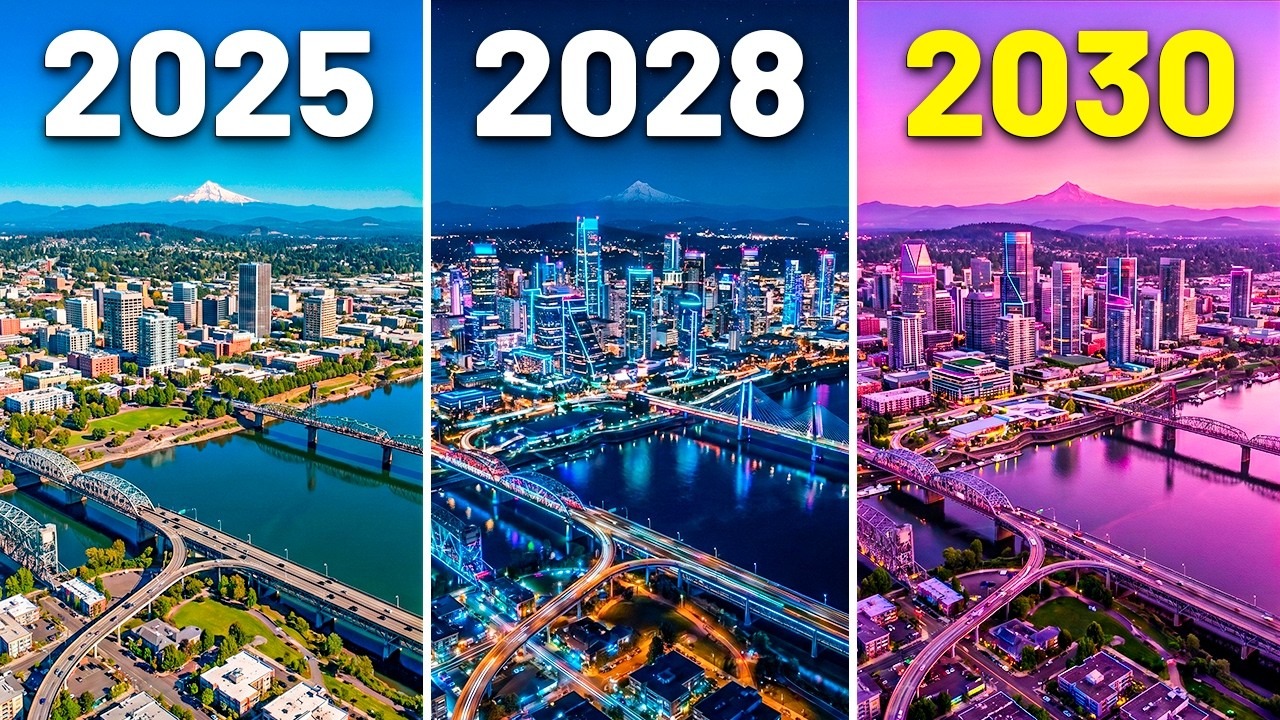
Vancouver and Clark County are changing fast. What once felt like Portland’s cheaper neighbor is becoming a destination with its own identity.
Major projects are reshaping how people live, move, work, and spend time in the area. Some are already visible. Others are still taking shape. Together, they are changing the look and feel of the region before 2030 even arrives.
For homebuyers, sellers, and homeowners, that means more than new buildings. It means shifting traffic patterns, rising demand, new job centers, and a stronger local market.
Why Vancouver has started to stand on its own
For years, Vancouver was seen as the practical choice. It offered more space, lower taxes, and a clearer path to homeownership.
That is still part of the appeal. But it is no longer the whole story.
More people are choosing Vancouver because they want to live there, not just because it is more affordable than Portland. The city has its own energy now.
Some of the biggest reasons include:
- River access
- Newer neighborhoods
- Better amenities
- A stronger local identity
- More visible investment
Clark County has grown into a place that feels more complete. That matters because a stronger sense of place often leads to stronger demand.
How the Portland comparison is changing
Vancouver used to sit in Portland’s shadow. That is changing.
People still cross the river for work, dining, and entertainment. But Vancouver now has more of its own pull.
That shift comes from a few things:
- The waterfront
- Local business growth
- More neighborhood pride
- Ongoing investment in east Vancouver and Camas
The result is a market that feels less like an alternative and more like a choice.
What today’s housing numbers say about demand
Home prices across the county show how much attention the area is getting.
| Area | Approx. Median Sale Price Range |
|---|---|
| Vancouver | High $400,000s to low $500,000s |
| Clark County overall | Low to mid $500,000s |
| Camas | Low to mid $700,000s |
The spread is clear. Vancouver still offers more relative value than Camas, but it is no longer a low-cost market. Demand is broad, and buyers are active at several price points.
The big projects reshaping Vancouver and Clark County
A few major projects are driving much of the change across the region. Some are already complete. Others are still unfolding, but their impact is easy to see.
The Vancouver Waterfront set the new standard
The Vancouver Waterfront changed the city’s image in a major way.
A former industrial area became a mixed-use district with:
- Housing
- Restaurants
- Retail
- Hotels
- Public space
- A trail
- Year-round activity
This project did more than improve the riverfront. It showed what Vancouver could become.
It also proved that high-quality, walkable development could work here. That opened the door for more investment and helped raise expectations across the city.
The Vancouver Innovation Center brings jobs, housing, and green space
The Vancouver Innovation Center, on the old HP campus in east Vancouver, is another major shift.
The plan includes:
- Apartments
- Retail
- Community space
- A school
- A park
- Walking paths
- Preserved trees and green space where possible
This is not just a redevelopment project. It is a move toward a more connected neighborhood.
The idea is simple. People should be able to live, work, shop, and spend time outdoors without driving everywhere. That kind of setup could shape East Vancouver for years.
Columbia Palisades is changing the 192nd corridor.
The 192nd corridor is already one of the fastest-changing parts of Clark County, and Columbia Palisades is adding to that momentum.
The old quarry site is being transformed into a mixed-use area with:
- Custom homes
- Townhomes
- Apartments
- Retail
- Office space
This matters because it changes both the land use and the feel of the area. A space that once felt industrial is becoming a planned district with more density and more services.
The broader growth around the Alister project and the HQ area points to the same direction. East Vancouver and the edge of Camas are moving toward a more urban future.
The I-5 Bridge replacement will affect daily life for years
The I-5 Bridge replacement is one of the most important transportation projects in the region.
This is not just about construction. It will affect commuting, traffic, and travel patterns for years.
What that likely means:
- Construction delays
- Lane shifts
- Longer commutes
- More traffic pressure
- Changes in where people choose to live
The short-term pain will be real, especially for people who cross into Portland often. But the long-term value is also real. A new bridge means better infrastructure, more reliability, and stronger support for future growth.
Terminal 1 could become a major visitor draw.
Terminal 1 sits in a strong location between the waterfront and the bridge. It has the potential to become one of the more interesting public-facing spaces in Vancouver.
The vision is for a market-style destination with:
- Local vendors
- Gathering areas
- Riverfront access
- More visitor activity
It is not likely to become a giant regional landmark overnight, but it could become a strong local draw. If it is done well, it could bring more energy, more visitors, and more spending into Vancouver’s core.
What these changes mean for homebuyers and homeowners
These projects will not stay contained in one area. They will influence pricing, demand, and neighborhood feel across the county.
Here is what matters most:
- More housing types are coming
- Demand may rise near job centers and mixed-use areas
- Location and timing will matter more
- Traffic could shape buying decisions
More density, more housing types, and a more urban feel
Clark County will likely feel more urban by 2030, even though suburban and rural areas will remain.
That change will come from:
- Zoning changes
- Middle housing
- Townhomes and duplexes
- More vertical development in growth areas
For buyers, that means more options. For longtime residents, it may mean neighborhoods feel a little denser and more active.
Why prices may keep rising
The biggest reason is still supply and demand.
More people want to live in Clark County, but the best areas still have limited inventory. New construction helps, but it does not always make housing more affordable.
A few things could keep pressure on prices:
- Strong local demand
- Outside interest
- Limited supply in desirable areas
- New jobs and amenities
- A stronger city image
If Vancouver keeps growing as a destination, home values may continue to rise through 2030.
How commute patterns and location choices may shift
The bridge project could change how people think about where they live.
Some Portland commuters may place more value on access and travel time. At the same time, more buyers may prefer to stay closer to east Vancouver, Camas, or newer job centers.
That means location choices may matter more than they used to.
- Westside access may matter more for Portland commuters
- Eastside access may matter more for local workers and families
- Traffic may play a bigger role in home search decisions
What Clark County may look like by 2030
By 2030, Clark County will likely feel more complete as a region.
It may no longer seem like just a place people sleep while working somewhere else. It could become a stronger economic center with a clearer identity of its own.
A more diverse economy beyond manufacturing
Manufacturing still matters, but the county is growing beyond that.
Other important sectors include:
- Education
- Health care
- Professional services
- Small and mid-sized businesses
That kind of mix creates more stability. It also supports housing demand and gives the area a broader base for long-term growth.
Why outside investors are paying attention
Large projects usually mean one thing. People with capital see long-term value.
The waterfront, mixed-use districts, and industrial redevelopment all show growing confidence in Clark County.
That tells us a few things:
- The region has strong location advantages
- Demand is still growing
- The public image is improving
- Outside money sees opportunity
That does not mean growth will be easy. But it does mean Vancouver is harder to ignore.
Conclusion
Vancouver and Clark County are entering a new phase of growth. By 2030, the area may look more urban, feel more self-directed, and offer a wider mix of jobs, homes, and public spaces.
For buyers and homeowners, the big thing to watch is momentum.
Projects like the waterfront, the Innovation Center, Columbia Palisades, Terminal 1, and the I-5 Bridge replacement are already shaping housing, traffic, and neighborhood identity.
If you are thinking about moving, investing, or staying put, pay attention to location, timing, and growth patterns. Clark County is getting bigger, busier, and more confident in its own identity.