
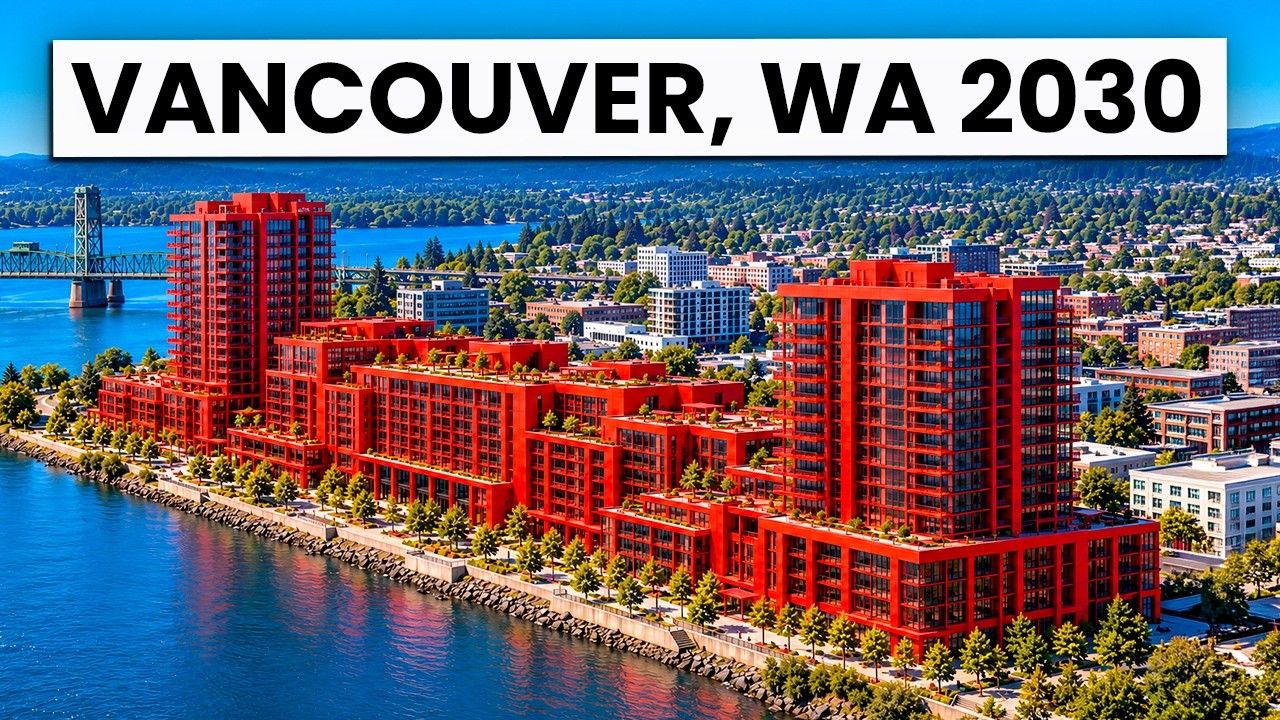
Vancouver’s biggest development projects are changing the waterfront, downtown streets, and former industrial properties. They’re adding housing, jobs, restaurants, parks, and places for the community to gather.
Some have already become part of daily life. Others are bringing new buildings and services to areas that have been in planning for years.
1. The Vancouver Waterfront
The Vancouver Waterfront has turned roughly 35 acres of former industrial land into one of the city’s busiest destinations. Getting the property ready for development took years of planning, cleanup, and investment.
Today, Grant Street Pier anchors a riverfront lined with restaurants, housing, and places to stay. The pier lights up at night, and the paved walking path stretches along the Columbia River toward McMenamins.
The development includes:
- Restaurants and places to get drinks.
- Hotels, apartments, condominiums, and senior living.
- Public paths and gathering spaces.
- Summer concerts and views of the Christmas Ships during the holidays.
The biggest change is how much activity the waterfront now supports. People come for dinner, stay for a walk, attend an event, or live within walking distance of the river. What was once industrial property has become a place to spend an afternoon or evening.
2. Terminal 1
Terminal 1 continues the riverfront development with offices, landscaped public areas, and plans for a market over the water.
Owned by the Port of Vancouver USA, the project includes the dark office building occupied by ZoomInfo and other tenants. Its architecture, central staircase, and surrounding landscaping make it a noticeable addition to the waterfront.
The next major feature is the proposed public market. Plans call for a roughly 40,000-square-foot space supported by a replacement dock.
The market would bring:
- Space for food vendors and shopping.
- Opportunities for local businesses.
- Another public destination along the river.
The concept has a Pike Place Market feel, with a focus on food, shopping, and local businesses. Its location near the Interstate 5 bridge would also make it one of the first waterfront buildings people notice when entering Vancouver from Oregon.
The Port’s Terminal 1 update outlines the dock work supporting the future market.
3. Waterfront Gateway
Waterfront Gateway fills the area between the newer waterfront district and historic downtown near Esther Short Park.
Walking between those destinations has meant passing through a stretch with fewer businesses and activities. This project brings housing, retail, and public spaces into that gap.
The 6.4-acre development is planned to include:
- Apartment buildings.
- Retail space.
- Public plazas.
- Places for neighborhood events and gatherings.
The project’s role is straightforward: make downtown and the waterfront feel more connected. Shops and public spaces would give people reasons to stop along the way, while new apartments would bring more residents into the area.
The city’s Waterfront Gateway project page identifies Parcel 3 as the first construction phase, with completion targeted for the first quarter of 2027.
4. The Heights District
The Heights District is redeveloping the former Tower Mall property and the surrounding central Vancouver area.
The plan follows a 20-minute neighborhood concept, placing more housing, services, jobs, and recreation close together. Instead of making a separate drive for every errand, residents would have more daily destinations nearby.
The district is planned around:
- Apartments, including affordable housing.
- Shops and local businesses.
- Office space.
- Community gathering areas.
- Arts and public spaces.
- Street and utility improvements.
Infrastructure work supports the larger redevelopment by preparing the area for new buildings and improving connections around them.
The Heights could bring a substantial change to this part of Vancouver. Rather than replacing the former mall with another single-use property, the plan creates a neighborhood where people can live, work, shop, and gather.
5. The Vancouver Innovation Center
The Vancouver Innovation Center, also called the VIC, occupies approximately 180 acres at the former Hewlett-Packard campus in east Vancouver.
Light-industrial employment remains at the center of the property. Developers have upgraded existing buildings while introducing plans for housing, a school, and public recreation.
Several parts of the campus are taking on new uses:
- Northeast corner: Land purchased by the city for a community park.
- Northwest area: A school site for Evergreen Public Schools.
- Southwest corner: Apartment construction.
- West side: Plans for an additional entrance.
In July 2025, Vancouver’s purchase of 14.3 acres for the community park marked a step toward adding public recreation to the campus.
The redevelopment brings more activity to a property long associated with employment. Housing, park space, and a future school would give the surrounding neighborhoods new reasons to use the site.
6. Columbia Palisades and the Former HQ Property
Columbia Palisades is adding medical services, shops, restaurants, and housing near 192nd Avenue on the Camas-Vancouver border.
The retail cluster on the south side has brought several everyday services to the area, including:
- Chipotle.
- Starbucks.
- A credit union.
- A local restaurant.
- A beauty salon.
Vancouver Clinic is another major part of the development. Its existing location established a medical presence, and a second-building expansion adds to the project. The clinic’s expansion announcement describes the additional investment in the Vancouver-Camas area.
Apartment construction next to the retail buildings is bringing housing into the same setting. That combination puts residents closer to food, coffee, and medical care.
Across 192nd Avenue, Romano Capital has taken over the property previously known as the HQ development. With the company involved on both sides of the road, this stretch is positioned for more residential and commercial development.
Romano Capital’s Palisades master plan outlines plans for multifamily housing, retail, offices, and a hotel.
7. Main Street Promise
Main Street Promise rebuilt the downtown corridor between Fifth and 15th streets, improving both the street itself and the utilities beneath it.
The work brought:
- Wider, accessible sidewalks.
- Improved crossings and better walking and biking access.
- New streetlights and decorative lighting.
- Updated water, sewer, and stormwater systems.
- Reconfigured parking.
- New landscaping, seating, and bicycle parking.
Construction disrupted downtown access while crews dug up and rebuilt the street. The result is a corridor designed to be more comfortable for people walking, visiting businesses, and spending time downtown.
The city announced the project’s completion on September 29, 2026, ahead of its original spring 2027 schedule.
Main Street Promise shows a different side of Vancouver’s growth. Alongside new buildings and development sites, the city is investing in the streets and infrastructure that existing neighborhoods and businesses use every day.