
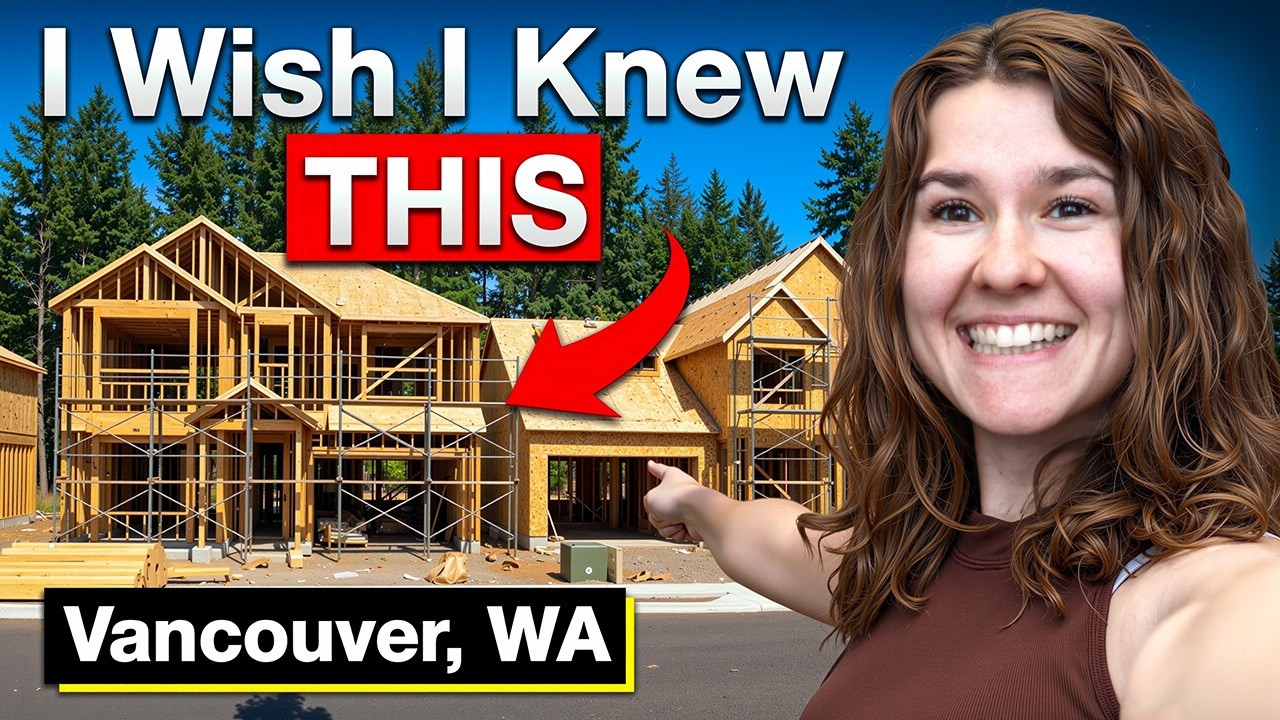
Buying a brand-new home in Vancouver, Camas, or greater Clark County is not the same as buying resale. The process may look cleaner from the outside, but new construction comes with more deadlines, more decisions, and more builder-specific rules than many buyers expect.
That matters even more in 2026, because Clark County’s new construction is active, competitive, and spread across a few key growth areas. This guide covers the biggest things buyers need to understand before signing with a builder, including lot sizes, HOA rules, timelines, incentives, and the questions to ask before committing.
New construction in Clark County works differently from resale
With a resale home, the process is usually simple. You tour homes, write an offer, negotiate terms, and move through inspections and closing.
New construction adds more layers.
- You are buying a home, and the building process
- You may have more meetings and more deadlines
- You often need to make decisions faster than you expect
That means more paperwork, more appointments, and more milestones to track. In many cases, you will meet with a sales team, choose a lot, review upgrades, make design selections, and stay on top of the builder’s schedule.
Buyers often walk into a model home and assume the process will be easy. The home looks polished, the community feels new, and the sales center is organized. But behind that clean presentation is a process with many more moving parts than a typical resale deal.
Why decision fatigue hits buyers faster than they expect
New construction falls on a wide spectrum. On one end, you have move-in ready spec homes. On the other hand, you have semi-custom and full custom builds. The more custom the home, the more choices land on your plate.
Those choices often include:
- Floor plan
- Lot
- Elevation
- Home orientation
- Structural upgrades
- Cabinet colors
- Flooring
- Countertops
- Lighting
- Plumbing fixtures
- Move timing
For some buyers, that level of control is a plus. For others, it gets overwhelming fast. If you are a first-time buyer or want a simpler path, a spec home or a more guided build may be a better fit than a fully custom project.
Why new construction is a strong fit for relocating buyers
Long-distance buyers often like new construction for one simple reason. It gives them time to plan.
That can help with:
- Work schedules
- School calendars
- Moving logistics
- Planning six to 12 months ahead
- Choosing from several homes or lots in one community
It also gives buyers a clearer landing spot. Instead of waiting for the right resale listing to appear, they can often narrow down a neighborhood and build a timeline much earlier.
There is also a community effect. In many new construction neighborhoods, neighbors move in around the same time, so the area feels new for everyone.
The builder, lot, and HOA can shape your experience more than the floor plan
Model homes are designed to sell a feeling. That is not a bad thing, but it can distract buyers from the details that matter most after move-in.
The biggest blind spots usually come down to three things:
- Who is building the home
- How the lot actually lives
- What the HOA allows
These details do not get as much attention as quartz counters or a nice fireplace wall, but they affect daily life much more.
Not all builders offer the same quality, communication, or warranty experience
Washington has strong building codes, and that helps. Still, code compliance does not guarantee great craftsmanship, clear communication, or an easy warranty process.
Builder styles can vary a lot.
Some are:
- More hands-on and responsive
- More volume-driven
- More standardized in how they operate
A regional or local builder may offer more direct contact. A larger national builder may offer more inventory and a more system-driven process. Neither is always better. It depends on what matters most to you.
Before you commit, ask how the builder handles:
- Punch lists
- Warranty claims
- Build updates
- Post-closing communication
Those questions tell you more than the model home does.
Large lots are much harder to find in Vancouver and Camas now
Many buyers still picture new construction with a big backyard and lots of breathing room. In most Clark County communities, that is no longer the standard.
Typical lot sizes in many single-family neighborhoods are often around 3,500 to 8,500 square feet. Quarter-acre lots still exist, but they are much less common and usually tied to higher price points or more custom projects.
That shift comes down to land costs, housing demand, and the way newer communities are planned. Builders can place more homes on available land, and cities want growth to fit around roads, utilities, and services.
Also, a larger lot does not always mean more privacy. Setbacks still control where the home sits. So even if the lot looks bigger on paper, the distance between homes may not feel much different.
Most new construction neighborhoods have an HOA, but they are usually manageable
In Clark County, HOA rules are common in new construction. For many buyers, that sounds worse than it feels in practice.
Most single-family neighborhood HOAs cover basic standards, not heavy control. Common rules may include:
- Exterior paint approval
- Trash can storage
- RV and boat parking limits
- Landscaping review
- Fence rules
- Shed rules
- Rental restrictions
- Guest parking rules
Dues in many single-family neighborhoods often range from $40 to $90 per month. Higher dues are more common in gated communities or neighborhoods with shared amenities like pools, parks, or clubhouses.
The point is not to fear the HOA. It is important to read the rules before you commit, because they shape how you will use the property after closing.
Timelines, incentives, and location matter just as much as price
A new construction deal is not only about the base price. Timing matters. Incentives matter. Location matters.
If you focus only on the list price, you can miss the bigger picture.
Build timelines in Vancouver, WA, are often more accurate than buyers expect
In Clark County, many experienced builders give fairly reliable timelines. Delays can still happen, especially in winter, but build schedules are often more predictable than buyers fear.
A normal timeline for many new homes falls in the six to 12-month range. Spec homes can close much sooner, while semi-custom or custom homes may take longer.
Weather can still affect the process, and winter often slows exterior work or site conditions.
A practical takeaway:
- Do not book movers for the exact day of closing
- Leave a buffer if possible
- Build in extra time for weather or supply delays
That small cushion can save a lot of stress.
Builder incentives can change a lot by season, area, and home type
Builder incentives are not fixed. They can change based on neighborhood demand, time of year, builder type, interest rates, and whether the home is spec, semi-custom, or custom.
Incentives may be stronger in:
- Late fall
- Year-end
- Slower markets
- Standing inventory homes
They may include:
- Closing cost credits
- Design studio allowances
- Appliance packages
- Interest rate buydowns through a preferred lender
The key is to look at the actual value, not just the headline offer.
Where new construction is really happening in Clark County right now
In 2026, a lot of new construction is concentrated in a few areas:
- North Vancouver
- Salmon Creek, especially around 179th
- East Vancouver near the 192 corridor
- North Camas and Green Mountain
- Ridgefield
These areas stay active because of:
- Available land
- New infrastructure
- Access to major roads
- Shopping and daily services
Questions to ask before you sign with a builder
Before you put down a deposit, slow down and ask the right questions.
A sales office can move fast. You need to make sure you understand the details first.
Ask about rules, deadlines, inspections, and substitutions
Before signing, ask:
- What are the HOA rules and CC&Rs?
- Are rental restrictions in place?
- What are the guest parking rules?
- Are ADUs allowed, if that matters to you?
- How fast do you need to make structural and design decisions?
- Can you get an independent inspection?
- What happens if materials are backordered?
- Can you choose a substitute, or is it automatic?
These details affect both the build process and daily life after closing.
Get clear on deposits, warranties, and energy features
Also ask about:
- Earnest money or deposit amount
- Warranty coverage
- Energy efficiency features
Deposit amounts can vary widely.
- Some builds may require around $5,000 to $10,000
- Custom homes may require more
A common warranty structure is:
- 1 year for cosmetic items
- 2 years for systems
- 10 years for structural coverage
Also ask whether the builder offers anything above the standard Washington energy code, such as:
- Better insulation
- Stronger air filtration
- More efficient duct design
Quick checklist for buyers
Before you sign with a builder, make sure you have checked:
- Builder reputation
- Lot size and setbacks
- HOA rules and dues
- Build timeline
- Incentives and lender offers
- Inspection rights
- Deposit requirements
- Warranty terms
- Energy features
Conclusion
Buying new construction in Vancouver, WA, can be a smart move in 2026, but buyers need to look past the model home and ask better questions.
The builder, the lot, the HOA, the timing, and the contract all matter just as much as the floor plan.
If you are comparing new construction in Clark County, take your time, compare builders carefully, and get local guidance before signing.